A court-martial is much more than a military version of a civilian criminal trial. It operates under a completely separate legal system governed by the Uniform Code of Military Justice (UCMJ), with its own procedures, rules of evidence, and sentencing structure. For service members, the consequences can be far more severe than those found in civilian court.
Because the military justice system is highly specialized, having an attorney who understands military law is critical. Even an experienced civilian criminal defense lawyer may not be familiar with the unique procedures that govern military courts, including Article 32 hearings, military-specific evidence rules, and the court-martial appeals process.
An experienced military lawyer understands these complexities and knows how to build a defense within the military justice system itself.
This guide explains how court-martial proceedings work, the types of charges service members may face, the potential consequences of a conviction, and what to look for when choosing a qualified military defense lawyer.
Understanding the Military Justice System
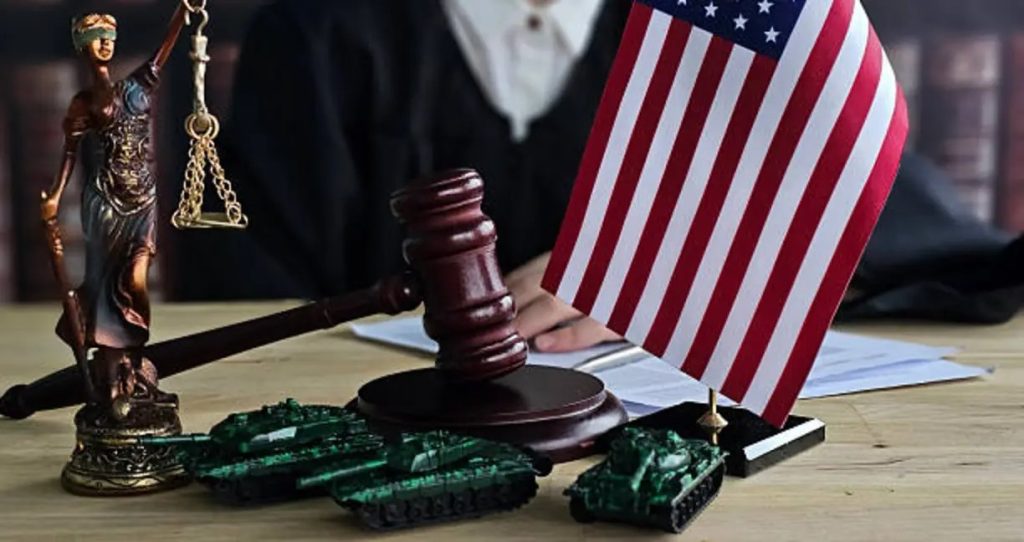
This image represents military defense legal services for service members facing court-martial proceedings and UCMJ violations. It highlights Article 32 hearings, military criminal defense strategies, court-martial representation, military investigations, appeals, discharge protection, and the importance of experienced legal counsel within the military justice system
To understand why specialized legal representation matters, it’s important to recognize how military justice differs from civilian criminal law.
While both systems aim to enforce legal standards and maintain accountability, the military justice system serves an additional purpose: preserving good order and discipline within the armed forces.
As a result, military courts handle many offenses that do not exist in civilian law.
The Uniform Code of Military Justice (UCMJ)
The Uniform Code of Military Justice (UCMJ) is the federal law that governs criminal conduct for members of the United States Armed Forces.
In some situations, conduct that would result in civilian criminal charges can also trigger military disciplinary action under the UCMJ, creating additional legal exposure for the service member.
Because military law combines traditional criminal offenses with military-specific violations, defending these cases requires knowledge of both criminal defense principles and military regulations. This is where an experienced military defense lawyer becomes essential. They understand not only the legal standards involved but also how military commands, investigations, and disciplinary processes can affect the outcome of a case.
both the UCMJ and civilian law, with the military prosecution proceeding independently of any civilian proceeding and potentially imposing its own separate punishment.
The UCMJ also applies to conduct that reflects on the military institution regardless of whether it would constitute a civilian crime. Article 134 the general article covers conduct prejudicial to good order and discipline or service discrediting conduct, a provision broad enough to encompass behavior that no civilian criminal statute addresses. The breadth of UCMJ jurisdiction and the reach of the general article make the military justice system more expansive in its coverage of service member conduct than civilian criminal law.
The Three Types of Court-Martial
The military justice system uses three types of court-martial, each based on the seriousness of the offense.
A Summary Court-Martial handles minor violations and is overseen by a commissioned officer rather than a military judge. Possible penalties include up to one month of confinement, loss of pay, and reduction in rank. Enlisted service members can refuse a Summary Court-Martial and request a Special Court-Martial instead.
A Special Court-Martial deals with more serious offenses and is conducted before a military judge, sometimes with a panel. A conviction can lead to a federal misdemeanor record, making representation by a military lawyer extremely important.
A General Court-Martial is the highest level and is like a felony trial in civilian court. Penalties may include lengthy confinement, a dishonorable discharge, loss of pay and benefits, and other severe consequences. A conviction results in a federal felony record that can affect a service member long after military service ends.
The Article 32 Hearing
Before a General Court-Martial can move forward, an Article 32 Hearing must take place. This hearing determines whether enough evidence exists to proceed with the case.
Unlike a civilian grand jury process, the defense can actively participate by questioning witnesses, presenting evidence, and challenging the government’s claims. A skilled military defense lawyer uses this opportunity to examine the prosecution’s case, uncover weaknesses, and sometimes even prevent the matter from advancing to court-martial.
Because of its importance, the Article 32 Hearing should never be viewed as just another procedural step. It can play a major role in shaping the outcome of the entire case.
The Convening Authority
The convening authority usually a commanding general or flag officer lays a unique role in the military justice system. Unlike civilian courts, this official has the authority to refer charges to a court-martial, choose the panel members who will serve as the military jury, and review certain aspects of the case after the trial ends.
In the past, convening authorities had broader powers to modify sentences and findings. Although recent legal reforms have limited some of that authority, their role is still important. An experienced military defense lawyer understands how to present clemency requests and other post-trial matters that may help a service member obtain relief.
The Most Serious Categories of Court-Martial Charges
Sexual Assault Under the UCMJ
Cases involving sexual assault under Article 120 of the UCMJ have become one of the most aggressively prosecuted offenses in the military justice system. Over the last decade, military leadership has placed significant emphasis on these cases, and alleged victims are often provided independent legal representation through Special Victims’ Counsel programs.
The penalties for an Article 120 conviction can be severe. Depending on the circumstances, a service member may face life imprisonment, mandatory sex offender registration, and a dishonorable discharge.
A skilled military defense lawyer carefully analyses every piece of evidence, including the consistency of witness statements, the reliability of forensic findings, and the context of communications between the parties.
Another important factor is that the legal definition of consent under Article 120 differs from some civilian laws. Because the prosecution must prove specific elements defined by the UCMJ and the Manual for Courts-Martial, defending these allegations requires a deep understanding of military sexual assault law.
For that reason, service members facing Article 120 charges should seek representation from a military lawyer with direct experience handling these highly specialized and high-stakes cases.
Drug Offenses Under Article 112a
Article 112a of the UCMJ prohibits the wrongful use, possession, manufacture, distribution, or introduction of controlled substances onto military property. Most military drug cases begin with routine urinalysis testing. A positive test can trigger an investigation that may lead to a court-martial, administrative separation, or both.
In many cases, the defense focuses on the reliability of the testing process. Issues involving sample collection, chain of custody, laboratory procedures, or even innocent ingestion can play an important role. An experienced military defense lawyer knows how to identify weaknesses in the evidence and challenge the prosecution’s case effectively.
Drug distribution charges and cases involving hard narcotics are treated much more seriously than simple use offenses. Convictions can result in significant confinement and a dishonorable discharge. Cases involving synthetic cannabinoids may also raise unique legal questions regarding notice and military regulations.
Assault and Violent Offenses
Assault charges under the UCMJ range from simple assault to aggravated assault, assault with a dangerous weapon, and maiming. The circumstances surrounding the alleged incident, including rank relationships and the military environment, often influence how these cases are prosecuted.
When assault allegations involve domestic violence, the consequences can extend beyond a court-martial. Service members may face both military prosecution and restrictions under the Lautenberg Amendment, which can affect their ability to carry firearms and perform military duties.
A knowledgeable military lawyer understands how military investigations, command actions, and civilian legal proceedings can overlap and works to protect the service member on all fronts.
Fraud, Larceny, and Financial Crimes
Financial crimes under the UCMJ include offenses such as larceny under Article 121, fraud-related charges, and making false official statements under Article 107. These cases often involve military pay and allowances, travel claims, government property, or misuse of government funds.
Because the military treats financial misconduct seriously, convictions can lead to confinement, discharge, and the loss of a military career built over many years.
Defending these cases requires more than simply reviewing financial records. A skilled military defense lawyer examines whether the prosecution can actually prove intent, whether the documentation supports the allegations, and whether proper procedures were followed during the investigation. Identifying weaknesses in those areas can be critical to building a strong defense.
AWOL and Desertion
Absence Without Leave (AWOL) under Article 86 and Desertion under Article 85 of the UCMJ both involve unauthorized absence from military duty, but they are not the same offense.
AWOL generally means a service member was absent without permission but had no intention of leaving permanently. Desertion is more serious because it involves an intent to remain away permanently or avoid important military duties.
The difference matters because the penalties are much harsher for Desertion. While the death penalty technically exists for wartime desertion under the UCMJ, it has not been used in modern military practice. More commonly, Desertion convictions can lead to lengthy confinement and a dishonorable discharge.
Many AWOL and Desertion cases involve underlying mental health issues such as PTSD, traumatic brain injury, or military sexual trauma. A skilled military defense lawyer can use medical records, expert testimony, and other evidence to provide context for the absence and present a more complete picture of the service member’s circumstances.
The Consequences of a Court-Martial Conviction
A court-martial conviction can affect far more than a service member’s military career. The consequences often continue long after military service ends.
The Discharge
The type of discharge a service member receives can have a lasting impact on their future. While Honorable and General discharges allow access to many benefits, Bad Conduct Discharge and Dishonorable Discharge are punitive discharges that result from court-martial convictions.
A Dishonorable Discharge carries serious consequences. It can limit employment opportunities, affect housing applications, create licensing issues, and make the individual ineligible for many veterans’ benefits.
Because discharge status follows a person for life, protecting it is often one of the primary goals of a military defense lawyer.
Loss of Retirement and Benefits
A punitive discharge can also mean losing military retirement benefits.
For service members who have spent years building a military career, the financial impact can be enormous. Someone close to retirement eligibility may lose benefits worth hundreds of thousands of dollars over a lifetime.
These losses can create long-term financial and healthcare challenges that continue well beyond military service.
Federal Conviction Record
A Special Court-Martial conviction results in a federal misdemeanor record, while a General Court-Martial conviction creates a federal felony record.
Many service members focus on the immediate military consequences of a court-martial, but the federal criminal record often becomes one of the biggest challenges after transitioning to civilian life.
Because of these lasting consequences, having an experienced military defense lawyer can make a critical difference in protecting both a service member’s military career and their future beyond the military.
How an Effective Court-Martial Defense Is Built
A strong military defense lawyer approaches a court-martial with careful preparation, detailed investigation, and a deep understanding of military law. Building an effective defense starts long before the case reaches trial.
Early Involvement and Investigation
The period before charges is formally filed is often the most important stage of the case. During investigations conducted by the Criminal Investigation Division, command authorities, or during Article 32 preparations, critical evidence can be gathered or lost.
When a military lawyer becomes involved early, the defense can begin its own investigation, interview witnesses while memories are still fresh, preserve important evidence, and identify information that may support the service member’s case.
Early action allows the defense to shape the response to the investigation rather than simply reacting after charges have already been filed.
Command Climate and Leadership Context
Court-martial cases do not exist in isolation. The military environment, leadership relationships, and command decisions often play a role in how a case develops.
An experienced military defense lawyer looks closely at factors such as:Because court-martial panel members are also military personnel, they understand the realities of military service. A defense that places the allegations within the proper command and leadership context can be especially persuasive.
Expert Witnesses in Military Cases
Expert witnesses can play a key role in court-martial proceedings, just as they do in civilian criminal trials.
Military cases may also require experts with specialized military knowledge, such as professionals familiar with urinalysis testing procedures, military mental health conditions, or military financial systems.
These experts help explain technical issues, challenge prosecution evidence, and provide information that supports the defense’s position. Their testimony can be an important part of building a strong and effective court-martial defense.
A military defense lawyer who identifies the expert witness needs of the specific case and engages qualified experts who can speak credibly to a military panel builds the evidentiary foundation for a defense that the panel can evaluate on the merits.
Sentencing Advocacy
In a court-martial where a conviction has occurred or where a plea agreement has been reached, sentencing advocacy presenting the service member’s complete military record, their character, their family situation, and the mitigating circumstances of the offense is the work that determines the difference between a sentence that allows the service member to rebuild their life and one that forecloses that possibility.
Military panels hear sentencing evidence in a bifurcated proceeding guilt and sentencing are separate phases. The sentencing phase allows the defense to present the full picture of the service member as a person and as a member of the military, including character witnesses, service record evidence, and expert testimony about the circumstances that contributed to the offense. A military defense lawyer who prepares thoroughly for sentencing who identifies the witnesses and the evidence that humanizes the service member and provides context for the panel’s sentencing decision achieves sentences that the record and circumstances of the case support rather than the maximum the conviction permits.
The Appellate Process in Military Justice
A court-martial conviction is not necessarily the end of the case. The military justice appellate system provides multiple levels of review that a military defense lawyer uses to challenge convictions and sentences that were obtained through legal error.
The Courts of Criminal Appeals one for each military service review General Court-Martial convictions and Special Court-Martial convictions that include a Bad Conduct Discharge. The Court of Appeals for the Armed Forces CAAF is the highest military appellate court and reviews cases from the service Courts of Criminal Appeals. Federal civilian courts, including the Supreme Court, have jurisdiction to review certain military justice matters through certiorari and habeas corpus.
The appellate process is a continuation of the defense effort that the military lawyer who handled the trial court proceedings initiated. An attorney who tried the case and who identifies the legal errors that occurred during trial is positioned to build the most effective appellate argument. Issues preserved during trial through appropriate objections and motions are preserved for appellate review. Issues that were not raised at trial may be reviewable for plain error but at a higher threshold than properly preserved issues.
Why Autrey Law Firm Makes Finding the Right Military Defense Lawyer Easier
Finding the right military lawyer when a service member is facing a court-martial that threatens their career, their retirement, their federal record, and in serious cases their freedom takes more effort than most service members and their families have in the immediate aftermath of charges being preferred or an investigation being initiated. Autrey Law Firm simplifies the entire process by giving service members and their families direct access to experienced military defense lawyer representation that understands the UCMJ, the Manual for Courts-Martial, the specific procedural requirements of the military justice system, and the full scope of consequences that court-martial proceedings carry.
You get attorneys who understand the military justice system from the inside, who approach each case with the investigation and preparation that the stakes demand, and who treat the service member’s career, benefits, and record as the genuinely important consequences they are rather than secondary concerns to the criminal outcome alone. For service members who want military defense lawyer representation that is actually qualified for the system they are being tried in, Autrey Law Firm is the starting point most service members wish they had found before making statements or decisions in the early stages of an investigation that affected their case.
Final Thought
A court-martial is a federal criminal proceeding with consequences that civilian criminal courts cannot impose punitive discharge, loss of retirement, loss of VA benefits, and the specific federal conviction designations of Bad Conduct Discharge and Dishonorable Discharge that follow a service member for the rest of their life. The military defense lawyer who handles that proceeding needs to understand not just criminal defense but the specific legal framework of the UCMJ, the procedural requirements of the military justice system, and the full scope of military-specific consequences that make court-martial defense different from civilian criminal defense in ways that matter enormously to the service member whose career and benefits are on the line.
The military lawyer who uses the Article 32 hearing as a genuine defense opportunity, who challenges urinalysis evidence with specific knowledge of testing procedures, who presents sentencing advocacy that humanizes the service member to a military panel, and who pursues every available appellate remedy when legal error occurred at trial is the attorney whose representation reflects the seriousness of what the service member is facing.
Military service involves sacrifice, commitment, and the trust that the military institution places in its members. When a service member’s conduct is called into question in a court-martial proceeding, they deserve legal representation that brings the same commitment to their defense that they brought to their service. That representation is not a civilian criminal attorney learning military law on the job. It is a military defense lawyer who already knows the system and who fights within it with the competence and preparation the stakes require.
Your military career and your future deserve the right defense from the start → autreylawfirm.com